
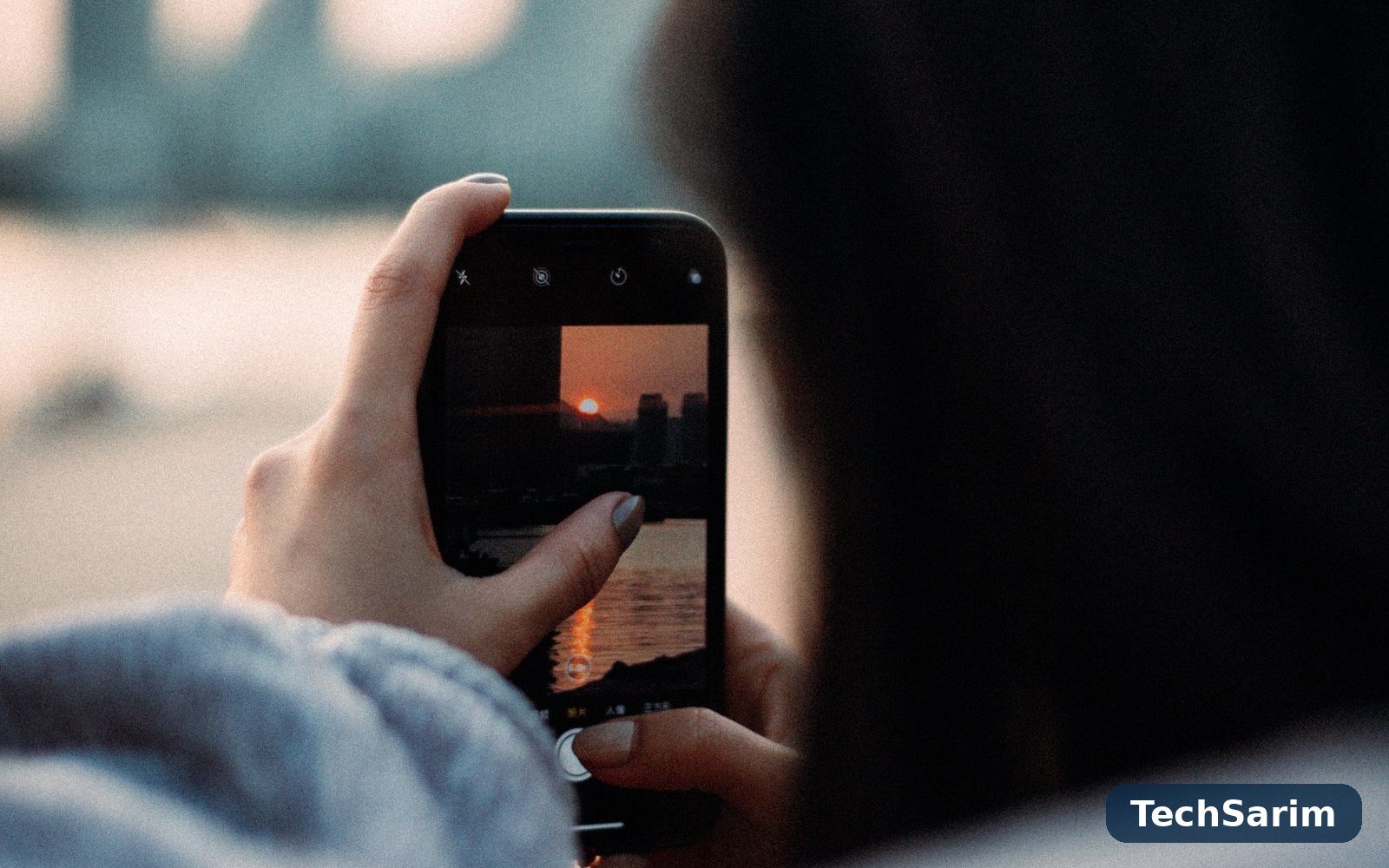

For most people, the phone is now the only camera they own — and in 2026 that is no longer a compromise worth apologising for. The best phone cameras shoot portraits a decade-old DSLR would be proud of, film family events in quality that used to require a dedicated camcorder, and do it all with a device that was already in your pocket. But “best camera” is not one crown. The phone that wins on stills is not always the phone that wins on video; the zoom champion is not the natural-look champion; and the smartest buy in the whole category costs roughly a third of the flagships it embarrasses in daylight.
This guide, part of our Smartphones & Mobile Technology coverage, is organised the way photographers actually choose: first the plain-English science of what makes a phone camera great — sensor, processing, stabilisation, lenses — then the picks by job: best overall flagship, best mid-range, best video, best zoom and best for creators on a budget, with a comparison table, the honest trade-offs nobody’s marketing mentions, and a section on the settings and habits that will improve your photos more than any upgrade. No invented prices and no benchmark scores quoted as gospel: camera quality is described by class and typical strength, because it is judged in prints and on screens, not in press releases.
What actually makes a phone camera great in 2026
Four things decide a phone camera, and only one of them is the number on the box.
Sensor size is the physics; everything else is negotiation. A camera sensor is a light bucket. The bigger the sensor — and, just as important, the bigger the individual pixels on it — the more light each pixel drinks in, and the cleaner the photo, especially after dark. This is why the flagship class converged on large main sensors (often described as “1-inch class” or by format fractions like 1/1.3″) while budget phones make do with much smaller ones, and why megapixel counts mislead so reliably: 200 small pixels on a small sensor collect less usable light than 50 large ones on a big sensor. In practice, flagships shoot their headline resolution for detail in daylight and merge pixels together — “pixel binning” — for low light. When you read one spec before buying, read the main sensor’s size, not its megapixel badge. The smartphone camera article on Wikipedia walks through this sensor-and-lens history well if you want the deeper version.
Processing is the darkroom, and it now matters as much as the glass. Every photo a modern phone produces is cooked: multiple frames merged to tame highlights and shadows (HDR), noise sculpted out, skin tones interpreted, skies recognised and deepened. This computational photography is why phones leapfrog their tiny hardware — and why brands have looks. Google’s processing favours contrast and texture; Samsung’s leans bright and saturated; Apple’s aims for faithful colour with restrained sharpening. None is objectively correct; they are house styles, like film stocks. It also explains the class’s famous failures: processing tuned for landscapes can waxy-smooth a face, and aggressive night modes can turn midnight into noon. The best camera phones in 2026 are the ones whose processing you like on your subjects — which is why sample photos of people, not test charts, are the review evidence worth trusting.
Stabilisation is the unglamorous spec that saves your worst shots. Optical image stabilisation (OIS) physically floats the lens or sensor to cancel your hand’s shake; electronic stabilisation (EIS) crops and warps the frame digitally to do the same for video. In daylight you will never notice either. Indoors, at dusk, at long zoom — the moments that actually ruin photos — stabilisation is the difference between a keeper and a smear. OIS on the main camera is now standard in the classes that matter; OIS on the telephoto lens is the flagship refinement to look for if you shoot distant subjects, because shake multiplies with focal length.
Lens versatility beats lens count. A serious phone camera system is really two or three cameras: a main lens (around 24mm equivalent) for most shots, an ultra-wide (13–16mm) for interiors, landscapes and group photos, and a telephoto (3x–5x optical, roughly 70–120mm) for portraits and distance. The dedicated portrait-length telephoto is the single biggest photographic upgrade of the flagship class — it is why flagship portraits have natural compression and blurred backgrounds optically, not just simulated. A macro lens on a spec sheet, by contrast, is usually a 2-megapixel filler; ignore lens count entirely and ask which focal lengths have real sensors and stabilisation behind them.
The photography picks at a glance
| Pick | Phone class | Why it wins | Watch out for |
|---|---|---|---|
| Best overall | Flagship Pro / Ultra class (iPhone Pro, Galaxy Ultra, Pixel Pro) | The complete system: big sensor, real telephoto, mature processing | Price; the three brands render very different looks |
| Best mid-range | Google Pixel a-series | Flagship-grade processing and main camera at a fraction of the price | No dedicated telephoto; zoom is digital crop |
| Best for video | iPhone Pro class | Stabilisation, colour consistency and format support the others chase | Android rivals win on some stills and zoom |
| Best zoom | Galaxy Ultra class | Genuine long-reach telephoto hardware, stabilised | Long-zoom quality still falls off in low light |
| Best for creators on a budget | Pixel a-series / upper Galaxy A class | Great stills, capable 4K video, money left for light and mic | Video features and secondary lenses are pared back |
Best overall: the flagship Pro and Ultra class
If money is secondary and the camera is the phone’s whole job, the answer is one of three flagships — and the honest advice is to choose by look, because all three are superb and none is best at everything.
Apple’s iPhone Pro class is the photographer’s safe pair of hands: colour that stays consistent across all its lenses (a rarer virtue than it sounds — many phones shift white balance as you zoom), skin tones reviewers reach for first, and a processing style that flatters without shouting. Samsung’s Galaxy Ultra class is the maximalist: the longest zoom in the mainstream, the biggest spec sheet, a vivid, saturated rendering that makes landscapes and travel shots pop straight out of camera, and a main sensor that resolves enormous detail in good light. Google’s Pixel Pro class is the computational purist: the smartest HDR, the most forgiving point-and-shoot experience, and low-light stills that regularly embarrass cameras with larger hardware, because Google’s processing extracts the most from every frame.
What unites them: large main sensors with stabilisation, proper ultra-wide and telephoto lenses, RAW capture for people who edit, and the processing maturity that comes from a decade of iteration. What separates them is taste and ecosystem, and the trade-offs section below is frank about both. The practical verdict: if your subjects are people, lean Apple or Google; if they are places and distance, lean Samsung or Google; if you cannot decide, you are exactly the reader the mid-range pick below was written for — because the gap has become genuinely small.
Best mid-range camera phone: Google Pixel a-series
The Pixel a-series remains the standing embarrassment of the flagship class, and for the same reason it topped the camera section of our guide to the best budget smartphones of 2026: Google’s photography advantage lives in software, and software is cheap to ship down-market. The a-series pairs a capable main sensor with the same processing pipeline, the same Night Sight-style low-light magic and the same “press the button, get the keeper” reliability as its Pro siblings. In daylight and ordinary indoor light — which is to say, in the overwhelming majority of real photography — its photos sit comfortably beside phones costing two or three times as much.
The compromises are real but specific. There is no dedicated telephoto lens, so zoom beyond a modest range is a digital crop of the main sensor — good at 2x, increasingly soft beyond it. The ultra-wide is a step down from flagship glass. Video, while perfectly capable, lacks the flagship’s stabilisation polish and pro formats. And charging and build are mid-range, because something has to be. But judged as a camera you carry, the a-series is the value pick of this entire article: it is the phone we recommend to anyone whose question is “best photos for sensible money,” full stop.

Best for video: iPhone Pro class
Phone video has a clear hierarchy, and it has been stable for years: the iPhone Pro class leads, and everyone else competes for second. The reasons are unglamorous and cumulative. Stabilisation that looks gimbal-assisted when walking. Exposure and colour that stay consistent mid-clip and across lenses, so a zoom during recording doesn’t lurch in tone. Microphones that capture usable audio rather than wind and handling noise. And an ecosystem of formats and apps — high-quality codecs, log profiles for colour grading, editing software that treats iPhone footage as a first-class citizen — that makes the iPhone the default tool for everyone from wedding guests to working videographers shooting B-roll.
The honest counters: the flagship Android rivals have closed most of the stabilisation gap, Samsung’s class offers more zoom flexibility while filming, and Google’s processing produces video stills and low-light clips with real strengths. If your life is 90% photos and 10% video, do not let this section choose your phone. But if video is the point — family films, content, work — the iPhone Pro class is the pick, and it is not particularly close.
Best zoom: Galaxy Ultra class
Zoom is where flagship hardware still earns its money, because software cannot invent detail that never reached the sensor. Samsung’s Ultra class has made long reach its signature: dedicated telephoto lenses at portrait and periscope ranges, stabilised, delivering genuinely usable photos at distances where other phones produce watercolour impressions — the school play from the back row, wildlife on a walk, architecture details, the moon-shot party trick. Google’s Pixel Pro class is the credible rival, pairing good telephoto hardware with processing that squeezes remarkable clarity from long-range crops; in moderate light its results can rival or beat Samsung’s, though the hardware reach ceiling is lower.
Two honest limits apply to every phone in this section. First, long-zoom quality collapses as light falls — stabilisation fights shake, not darkness — so “100x” marketing numbers describe framing, not printable quality; the usable range is a fraction of the advertised one. Second, between the optical steps, all phones fill gaps with digital cropping and sharpening, and the seams show if you pixel-peep. Within those limits, if distant subjects are your photography, the Ultra class is the tool — verify the exact model’s lens lineup before buying, since telephoto configurations change between generations; a database like GSMArena lists each model’s true focal lengths and apertures.
Best for creators on a budget: Pixel a-series and the upper Galaxy A class
Creators — the TikTok, Reels and YouTube-short economy — need a slightly different phone than photographers do: strong front camera, dependable 4K video, a main camera that handles mixed indoor light, and enough money left over for the accessories that actually transform output. Two classes fit. The Pixel a-series is the stills-and-simplicity answer, with front-camera quality and processing that flatter faces and a price that leaves room in the budget. The upper Galaxy A class counters with a bigger, brighter screen for framing and reviewing footage, typically strong battery life for a day of shooting, and a versatile lens set for its price.
The real advice in this section is budget allocation, not brand loyalty. A mid-range camera phone plus a small LED light, a basic tripod-grip and a clip-on microphone will out-produce a flagship shot bare-handed in bad light, every time — lighting and audio are where amateur footage actually fails. Our roundup of the best AI tools for content creators covers the editing and captioning side of that workflow, and if your total budget is firmly capped, our guide to the best Android phones under $300 marks which of that class’s cameras punch highest. Buy the a-series or A-class phone, spend the difference on light, and your audience will see the upgrade immediately.
The honest trade-offs
Computational look versus natural look. Every modern phone photo is processed; the argument is about degree. Heavy processing delivers instant, shareable punch — lifted shadows, saturated skies, smoothed noise — and, pushed too far, the tells: watercolour foliage, plastic skin, night scenes rendered as day. Brands sit at different points on this dial and generations shift it, which is why the same maker’s new model can look less natural than its old one. The escape hatch at the flagship level is RAW capture and restrained “natural colour” modes; at every level, the discipline is to judge a phone by full-size samples of your subjects — your kids, your dog, your food, your streets — rather than by landscape hero shots chosen by marketing.
Video ecosystems are stickier than photo quality. Photos are universal: a JPEG or HEIF from any phone opens anywhere, and photo quality alone rarely locks anyone in. Video is different. Apple’s format support, editing-app priority and sharing pipeline make iPhone footage the path of least resistance for serious video work and for mixed-household sharing; Android’s best video phones produce excellent files that occasionally meet friction in apps optimised iPhone-first. If your household and collaborators are all on one platform, that convenience is a real camera feature — price it honestly alongside sensors and lenses.
And two smaller truths. First, camera bumps and lens quality have converged at the top: the flagship you choose will be within a whisker of its rivals on most shots, so ergonomics, ecosystem and look are legitimate deciding factors, not consolation prizes. Second, software support matters to cameras too — processing improvements and new photo features arrive in updates, so the long-update-pledge phones keep getting better cameras after purchase while short-pledge rivals freeze on day one.
Settings and habits that matter more than hardware
The cheapest camera upgrade is the phone already in your hand, used properly. These habits close more of the gap to a flagship than any spec does:
- Clean the lens. The single highest-impact act in phone photography. A pocket-carried lens wears a film of grease that scatters light into haze and flare — the “my photos look soft lately” mystery is usually a shirt-wipe away from solved.
- Tap to focus, then slide exposure down a touch. Phones default to brightening scenes, which blows out skies and faces. Locking focus on your subject and nudging exposure slightly negative preserves highlights and adds mood — the closest free trick to a “pro look.”
- Use the 2x or portrait-length lens for people. Faces shot on the wide main lens from close up distort — bigger noses, stretched edges. Step back and use the telephoto or 2x crop; the compression is why flagship portraits flatter, and most decent phones can imitate it.
- Turn on the grid and respect the light you have. Gridlines fix horizons and composition in one second. And shoot with light direction in mind — subject facing a window, sun behind you for landscapes, golden hour over midday — because no processing fully rescues bad light.
- Shoot bursts and pick; edit lightly. For kids, pets and sport, hold the shutter and choose the one sharp frame. Then edit with restraint — exposure, contrast, a gentle crop — since over-filtering is the fastest way to make a good phone photo look cheap.
- For video: lock it down and slow down. Brace against a wall or use a cheap grip, pan half as fast as feels natural, and record a few seconds before and after the moment. Stability and patience read as “expensive camera” more than resolution does — 4K at a sensible frame rate, steadily held, beats shaky 8K every time.
Frequently asked questions
Which phone takes the best photos overall in 2026?
One of the three flagship Pro/Ultra models — and which one depends on your taste in processing. Apple for consistency and video, Samsung for zoom and vivid colour, Google for forgiving point-and-shoot stills and low light. At full size, on your own subjects, they separate by look, not by quality tier.
Is a mid-range phone camera actually good enough?
For daylight, family, travel and social photography — yes, genuinely. The Pixel a-class proves it: flagship processing on mid-range hardware wins most real-world shots. You give up the dedicated telephoto, the best low-light ceiling and pro video formats, and many people never touch any of the three.
Do more megapixels mean better photos?
No — sensor size and pixel size matter more, which is why 50-megapixel flagships routinely outshoot 200-megapixel budget phones after dark. Treat the megapixel count as a marketing number and look for the sensor format (like 1/1.3″) instead.
iPhone or Android for photography?
For stills, it is a taste and ecosystem question — both platforms field superb flagship cameras with distinct looks. For video-first work, the iPhone Pro class still leads on consistency and app support. If you shoot RAW and edit heavily, both flagships oblige; compare the file workflows, not the badges.
What about my old phone — is an upgrade worth it for the camera alone?
If your phone is three or more generations old, yes: sensor, stabilisation and processing gains compound, and low-light performance will feel like a different product category. If it is one or two generations old, the habits section above will improve your photos more than the upgrade will.
Should I buy a “camera phone” or a phone plus a real camera?
If photography is becoming a hobby you practise weekly, a dedicated camera with a larger sensor still wins on control, lenses and low light — phones win on always being with you. Many enthusiasts end up with both: the phone for life, the camera for intent. Buy the phone for your life first.
The bottom line
The best phone cameras of 2026 have split into honest specialities. The flagship Pro/Ultra class — Apple, Samsung, Google — is the complete answer, separated by look and ecosystem rather than quality: iPhone Pro for video and consistency, Galaxy Ultra for zoom and vivid travel shots, Pixel Pro for the smartest stills. The Pixel a-series is the value champion, close enough in real light that most buyers should start there and stop. And the creator’s best move is a mid-range camera phone plus light and a microphone, not a bare flagship. Whatever class you choose, judge it by full-size photos of your own subjects, verify the exact model’s lens and sensor specs before buying, and learn the six habits above — they transfer to every phone you will ever own, which is more than any camera upgrade can promise. We keep this guide and the rest of our smartphone camera coverage updated as new models land, because in this category the crown changes hands with every season.