

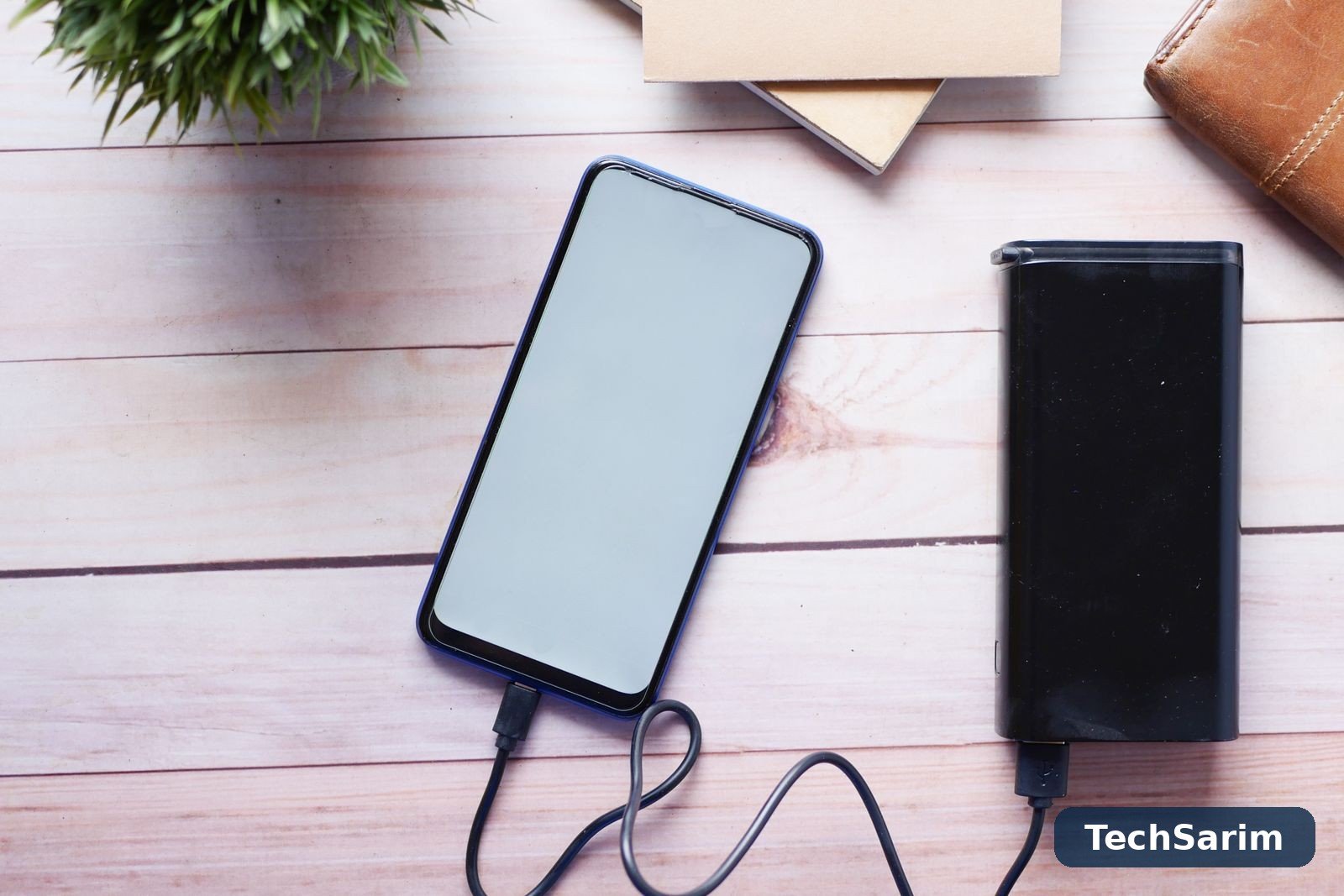
A power bank is the simplest gadget in this entire Tech Gadgets & Product Reviews category: a battery in a box, with a port on it. And yet it is also the gadget whose packaging lies to you the most cheerfully. The capacity on the front is not the capacity your phone receives. The wattage on the front is not the wattage your phone will accept. The “charges your phone four times!” claim assumes a phone from several years ago, charged under laboratory politeness. None of this makes power banks a bad buy — a good one is the difference between a dead phone at the airport and a calm evening — but it does mean the honest way to shop is by class and by physics, not by the biggest number on the box.
This guide works the way our other gadget guides do: no invented prices, no fantasy specifications, and verdicts by type of buyer rather than a single crowned winner. We will start with the two honest numbers — delivered capacity and accepted wattage — then walk the three capacity classes, magnetic charging, the flight rules, and the safety checks that separate a tool from a hazard. By the end you will know exactly which class you need, which features are worth paying for, and which are decoration.
The picks at a glance
| Class | Rated capacity | What your phone realistically gets | Best for | What to demand |
|---|---|---|---|---|
| Slim / pocket | ~5,000mAh | Roughly one partial-to-full charge — a genuine top-up, not a refill | Daily carry, evenings out, emergencies | Pocketable shape, USB-C, at least 18–20W output |
| Everyday sweet spot | ~10,000mAh | Around 1.5–2 full charges of a typical phone | Most people, most days; commuting and day trips | USB-C PD with PPS, 20–30W, honest watt-hour rating printed |
| Big brick / travel | 20,000–27,000mAh | Around 3–5 phone charges, or real help for a USB-C laptop | Long trips, families, laptop top-ups, outages | 45W+ USB-C PD, multiple ports, under the 100Wh flight limit |
| Magnetic (MagSafe / Qi2) | 5,000–10,000mAh | Less than the same size wired — wireless wastes more energy | iPhone users and Qi2 Android owners who value convenience | Qi2 certification for 15W magnetic speed, strong magnets, pass-through charging |
The table is the shape of the market. The sections below are the reasoning, starting with the number everyone gets wrong.
The capacity lie: why 10,000mAh never delivers 10,000mAh
Here is the single most useful fact in this guide: the milliamp-hour figure printed on a power bank is measured at the voltage of the cells inside it — about 3.7 volts — while your phone charges at 5 volts and above. A power bank is, at heart, a battery pack plus circuitry that converts its stored energy up to the voltage your phone expects, and both the conversion and the physics of moving energy cost a slice of it. Add the heat losses in the cable and in your phone’s own charging circuitry and the honest rule of thumb emerges: expect roughly 60–70% of the rated mAh to arrive in your phone’s battery.
So a 10,000mAh power bank delivers something like 6,000–7,000mAh of usable charge. A typical modern phone carries a battery in the 4,500–5,500mAh range — check the models in our best budget smartphones of 2026 roundup and you will see how uniform that band has become — so the real-world translation is “about one and a half charges”, not the “two full charges!” the box promises, and certainly not the three that the cheapest listings claim. A 5,000mAh bank is a top-up: most of one charge. A 20,000mAh bank is three to four honest charges, not five or six.
Better brands print the watt-hour (Wh) rating alongside the mAh, and watt-hours are the honest currency because they already account for voltage: a 10,000mAh bank at 3.7V stores about 37Wh, however it is marketed. When you compare two banks, compare Wh. When a listing shows only a huge mAh number and no Wh, no weight and no brand you have heard of, treat the number as fiction — the market’s worst offenders advertise capacities that would require the device to weigh twice what it does.
One more consequence of the 60–70% rule: it gets worse, not better, with wireless charging, and it gets worse as a power bank ages. Budget your purchase with headroom. If you need two guaranteed full charges on a trip, buy the class above the one the marketing maths suggests.
Speed is the other half: wattage, PD and brand protocols
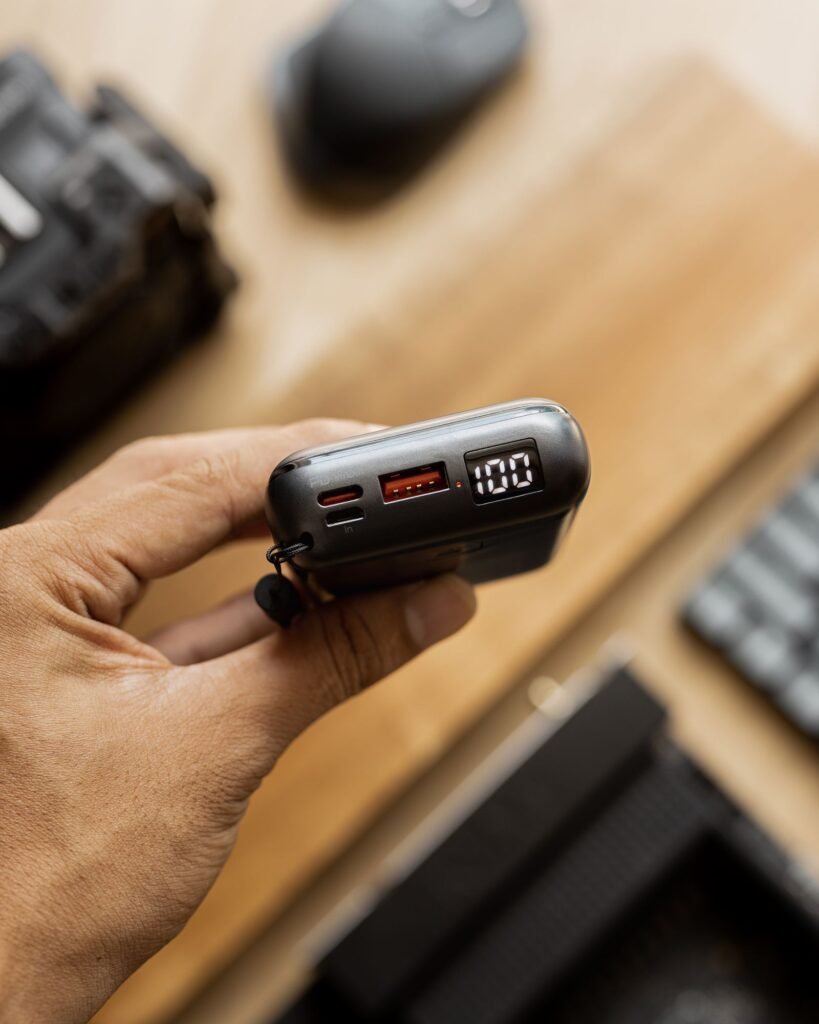
Capacity decides how much; wattage decides how long you are tethered to the brick. The good news is that one standard now does most of the work. USB-C Power Delivery (PD) is the universal fast-charging language: a PD power bank and a PD phone negotiate the highest voltage and current both support, and modern banks in the 20–30W range will fast-charge the large majority of phones at or near the fastest speed those phones accept from a generic charger. If you remember one shopping rule, make it this: USB-C PD output, clearly specified in watts, or do not buy it.
The honest complication is that several phone brands run their own private fast-charging systems on top of, or instead of, standard PD. The fastest headline speeds from brands like Xiaomi, OnePlus, Oppo and Vivo typically need that brand’s own charger and sometimes its own cable; a generic PD power bank will charge those phones perfectly well, but at standard PD speeds rather than the advertised maximum. Samsung’s “super fast charging” needs PD with a feature called PPS — most quality banks from the better accessory brands include it, bargain ones often do not — so Samsung owners should treat “PPS” on the spec list as non-negotiable. Apple’s iPhones are the easy case: they speak standard PD, and any decent 20W+ PD bank fast-charges them.
Also note the difference between a bank’s total output and its per-port output. A “65W” bank may deliver that only from one port, alone; plug in a second device and the power splits, sometimes ungracefully. If you plan to charge a phone and earbuds together, that is fine. If you plan to charge two phones quickly, read the per-port figures, not the headline. And check the input wattage too — how fast the bank itself refills. A big bank that only accepts a slow input can take most of a night to recharge, which matters on a trip with one hotel socket and an early start.
The slim class: 5,000mAh, the honest top-up
The smallest useful class is built around a single job: rescuing a phone that is dying at 6pm, not refuelling it for a weekend. A 5,000mAh bank delivers roughly 3,000–3,500mAh after losses — most of a charge for most phones — in a body that can be genuinely pocketable or, in the magnetic versions, snap onto the phone itself.
Within this class, design is the differentiator, because the electronics are simple. The best designs are the ones you forget you are carrying: rounded edges, a short built-in cable or a connector that plugs straight into the phone’s port so there is no cable to lose, and a shape that does not fight your phone for pocket space. Built-in-cable and plug-in designs earn a real recommendation here, with one caution — a bank that hangs off your phone’s USB-C or Lightning port puts mechanical stress on that port, so treat the pair as one object and do not pocket them connected and swinging.
Brand behaviour in this class is consistent. The premium accessory brands (the Anker class) charge more and deliver tidier design, better cells and honest ratings. The value brands (the Xiaomi class) deliver the same basic rescue for noticeably less, with plainer shells. The badge-engineered no-names deliver a lottery. At this size the price differences are small in absolute terms, so our honest advice is to buy from a brand with a reputation to lose — a battery is the one accessory where the cheap version’s failure mode is not merely “it broke”.
The everyday sweet spot: 10,000mAh
If the slim class is a rescue, the 10,000mAh class is the answer for almost everyone, and it is where we would send a friend who asked no further questions. Roughly one and a half to two honest phone charges, a body still comfortable in a jacket pocket or small bag, fast enough output to be useful in a coffee-shop half hour, and — because this is the highest-volume class — the fiercest competition and the best-engineered products.
What separates the good from the mediocre here is not capacity, which is fixed by the class, but the details. Look for USB-C PD with PPS at 20–30W; a second port (USB-A for a friend’s older cable, or a second USB-C) for sharing; a battery indicator you can read at a glance — a small percentage display is genuinely better than four ambiguous dots; pass-through charging, so the bank can refill itself while it charges your phone overnight; and fast input, so the bank itself is full again in a couple of hours rather than most of the night. A low-current mode for earbuds and watches is a small feature that matters if you charge small accessories, since some banks otherwise shut off, thinking nothing is connected.
The brand pattern from the smaller class repeats, one tier up: premium brands sell polish, honest specs and support; value brands sell 90% of the function for clearly less money; the mid-tier feature brands (the Baseus and Ugreen class) split the difference with displays, built-in cables and extra ports. All three approaches are legitimate. The illegitimate products are the ones with no Wh rating, no certifications and a capacity claim that physics declines to endorse.
A note for heavy users: if you regularly end the day on your second charge, the fix may not be a bigger bank. Our guide to how to improve phone battery life covers the settings and habits that claw back hours — a power bank should cover exceptional days, not subsidise a fixable drain.
The big bricks: 20,000mAh and up
Above 20,000mAh, a power bank changes jobs. It stops being a phone accessory and becomes shared infrastructure: the thing that keeps two phones, a tablet and a pair of earbuds alive through a long travel day, a festival weekend, a work site or a power cut. The honest delivered figure is around three to five phone charges, and the weight — roughly the weight of a second phone, or more — is the price. Nobody carries this class by accident; you carry it because the day demands it.
The feature that defines the top of this class is laptop-grade output. Banks with 45W, 65W or higher USB-C PD can meaningfully charge USB-C laptops and will fast-charge any phone with capacity to spare. If laptop charging is even a maybe for you, buy it in this purchase rather than the next one — but verify the per-port wattage, because the biggest number on the box is often a total shared across ports. Multiple ports (two USB-C plus a USB-A is the sensible arrangement) and a clear display move from luxuries to necessities at this size.
Two cautions belong to this class alone. First, heat: pushing high wattage into a big pack, or pulling it out, generates warmth, and a quality bank manages it with temperature monitoring that throttles rather than cooks — another argument for established brands in the class where the most energy is stored. Second, self-discharge and storage: a big bank left in a drawer for months will not be full when the outage comes. Charge it every few months, store it part-charged rather than brim-full if it will sit for a long stretch, and make checking it part of your trip preparation rather than your trip.
Magnetic power banks: MagSafe, Qi2, and the convenience tax
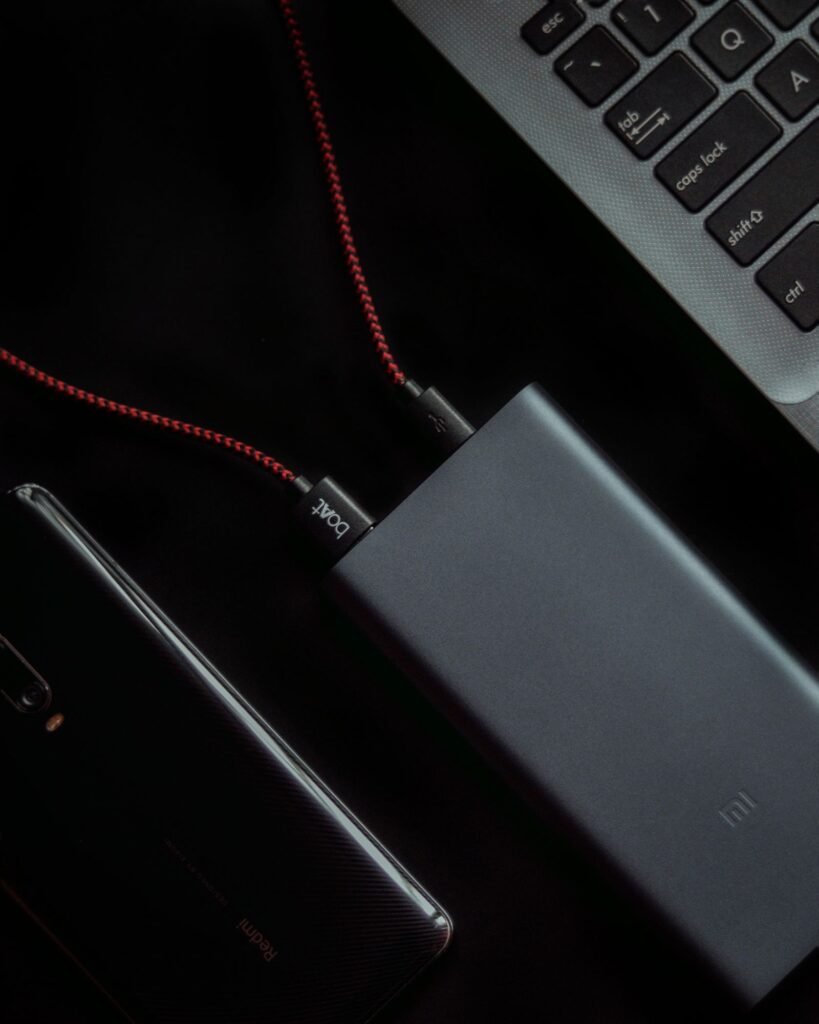
The most enjoyable way to use a power bank is to not notice it, and that is what magnetic banks sell: snap one onto the back of the phone, no cable, no dangling brick, and keep walking. Apple’s MagSafe made the idea mainstream for iPhones, and the Qi2 standard has since brought properly aligned, full-speed magnetic charging to Android as well — first through cases and a growing number of native phones. If you are buying magnetic in 2026, Qi2 is the mark that matters: a Qi2-certified magnetic bank snaps into alignment and charges an iPhone at up to 15W, while older magnetic banks using plain Qi typically manage about half that, and misaligned plain-Qi charging can be slower still.
Now the honest tax, because there is one and it is physics rather than brand failure. Wireless charging wastes more energy than a cable — remember the 60–70% rule for wired delivery, and expect magnetic delivery to land lower, roughly half the rated capacity reaching the phone on a small magnetic bank. Heat is the other cost: a phone charging wirelessly against a warm battery runs hotter than one on a cable, and sustained heat is the enemy of your phone battery’s long-term health. Neither fact makes magnetic banks a bad buy. It makes them a convenience purchase with open eyes: buy them for the snap-on freedom on days out, and reach for a cable on the long haul.
Compatibility needs one careful sentence. MagSafe and Qi2 magnets align the same way, so magnetic banks generally attach to both ecosystems; what differs is charging speed and extras like Apple’s battery widget integration. Android phones without native Qi2 need a magnetic case to play, and a thick or metal-backed case can weaken the hold on any phone. If the bank slides off in your bag, it is not charging — it is just a warm passenger.
Flying with a power bank: the rules that actually apply
Power banks are one of the few gadgets with rules written by aviation regulators rather than marketing departments, and the rules are refreshingly consistent worldwide. The FAA’s PackSafe guidance states the framework plainly: spare lithium batteries and power banks travel in your carry-on, never in checked luggage, because a battery problem in the cabin can be dealt with and one in the hold cannot. Every airline we are aware of enforces the same rule, and airport security staff confiscate checked-bag power banks without ceremony.
The size limit is expressed in watt-hours, which is the second reason to know your bank’s Wh rating. Power banks up to 100Wh are allowed in carry-on without asking anyone — that covers everything up to roughly 27,000mAh, which is to say the entire mainstream market including the big bricks above. Between 100Wh and 160Wh you need the airline’s approval, typically limited to two units; above 160Wh is cargo territory, not passenger luggage. In practice: if your bank is a normal consumer model with its Wh printed on the shell, you are fine. If the rating has rubbed off or was never printed, security is entitled to be suspicious — one more reason the unbranded mega-capacity bargains are a poor travel choice.
Two practical addenda. Terminals on a loose bank should be protected against short circuits — the original box, a pouch, or tape over exposed connectors on plug-in models. And a growing number of airlines have added their own rule against using power banks during the flight or charging them from seat power; check your carrier’s current policy before you rely on a mid-flight top-up, because this is the one part of the rules that is actively changing.
Safety: certifications, swelling, and knowing when to retire one
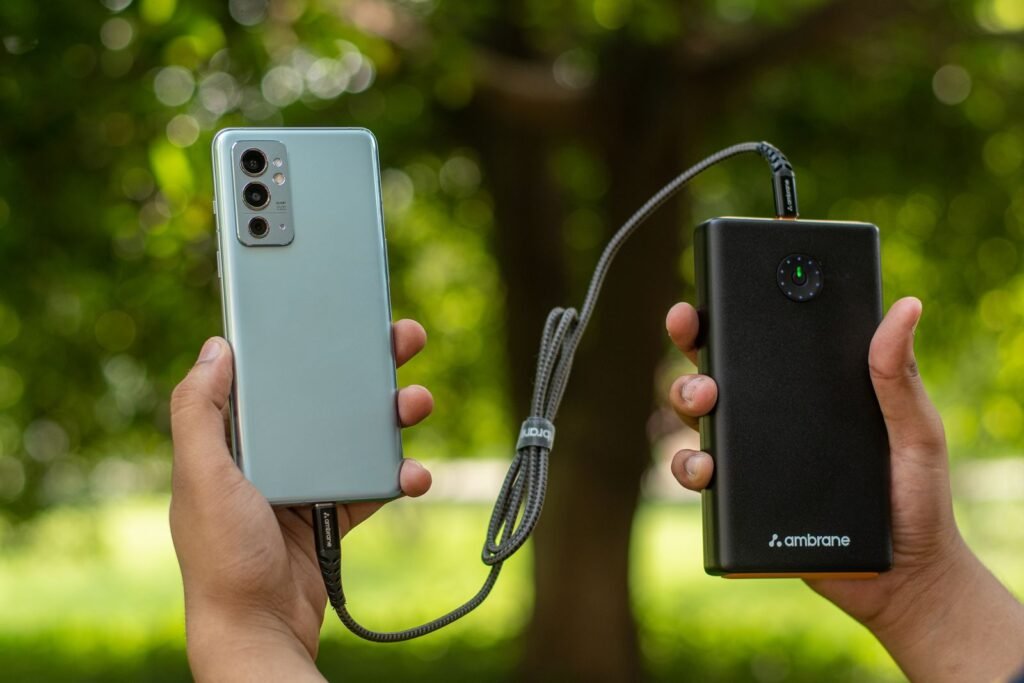
A power bank is stored energy, and the difference between a tool and a hazard is manufacturing quality. The checks are simple and worth the thirty seconds they take. Buy from a brand with a real name and a real warranty. Look for recognised certification marks appropriate to your market — CE, FCC, UKCA, and ideally independent test-house marks such as UL or TÜV — printed on the device along with its ratings. Be wary of any bank that feels suspiciously light for its claimed capacity: cells have a fixed energy density, and missing weight is missing battery, or worse, missing protection circuitry.
In use, the warning signs that a power bank is done are physical, and they are not subtle once you know them. Stop using a bank — and dispose of it through a battery recycling point, never household rubbish — if the casing swells, bulges or splits at the seams; if it becomes hot while simply sitting unused; if it charges noticeably slower or empties far faster than it used to; if it smells sweet or chemical; or if it has taken a drop hard enough to dent the shell. A swollen battery is not a battery with a quirk; it is a battery asking to be retired today, stored away from anything flammable in the meantime.
Longevity habits are the same lithium common sense as for phones: avoid leaving a bank baking in a hot car, do not charge it under a pillow or buried in a bag where heat cannot escape, and use the cable it came with or a quality equivalent. A well-kept bank from a decent brand should serve for years and hundreds of cycles before its capacity fades enough to matter — and when it does fade, that is a retirement, not a failure.
The cable is half the system
Every power bank review that ignores the cable is reviewing half a product. Fast charging is a negotiation between bank, cable and phone, and the cable is the link most likely to quietly cap the speed: a tired, ultra-thin or charge-only cable can turn a 30W bank into a 10W experience, and the bank gets the blame. For USB-C fast charging you want a cable rated for at least 60W — such cables are inexpensive and are marked or sold as such — and for the high-wattage big bricks, check whether a 100W-rated cable is required to reach the headline output, because standard USB-C cables top out below that.
Built-in cables, increasingly common on mid-size and magnetic models, solve the forgotten-cable problem and remove the weakest link from the chain; the trade-off is that when the built-in cable frays, the whole bank is diminished rather than a cable being replaced. A short separate cable — 20 to 30cm is the travel sweet spot — plus a bank with honest ports remains the most flexible arrangement. And one genuinely useful habit: choose a USB-C to USB-C cable from a known brand and keep it with the bank permanently. It will also move files between your phone and a computer at proper speed on the days you need that instead — our walkthrough of how to transfer files from phone to PC covers which cables and ports actually deliver those speeds, and which silently do not.
FAQ
How many charges should I actually expect from a 10,000mAh power bank?
About one and a half to two full charges of a typical modern phone. The rated capacity is measured at the internal cell voltage, and conversion losses mean roughly 60–70% of the printed figure reaches your phone. Any listing promising three or four full charges from 10,000mAh is describing a phone that does not exist.
Is a bigger power bank always better?
No — it is heavier, slower to refill, and pointless if it lives in a drawer. Buy for your worst normal day, not your worst imaginable one. Most people are best served by the 10,000mAh class; frequent travellers and multi-device users are the ones who genuinely benefit from 20,000mAh and up.
Why does my fast-charging phone charge slowly from my power bank?
Usually one of three reasons: the bank’s output is below your phone’s fast-charge threshold, your phone’s fastest mode needs its own brand protocol or Samsung’s PPS and the bank does not offer it, or the cable cannot carry the wattage. Fix them in that order — cable first, because it is the cheapest and the most common culprit.
Can I take a 20,000mAh power bank on a plane?
Yes, in your carry-on. The limit is 100 watt-hours without airline approval, and a 20,000mAh bank is roughly 74Wh — comfortably inside. It must never go in checked luggage, and if its Wh rating is not printed on the shell, expect questions at security.
Are magnetic power banks bad for my phone’s battery?
They are harder on it than a cable, mildly. Wireless charging wastes more energy as heat, and heat ages batteries. Used as an occasional convenience, the effect is small; used as your only charging method every day, a cable is the kinder habit. Qi2 models at least guarantee proper alignment and honest 15W speed.
How long should a power bank last before I replace it?
Years, typically — a quality bank holds most of its capacity through a few hundred full cycles. Replace it when the delivered capacity has clearly faded, and immediately if it swells, overheats at rest, smells chemical, or has a damaged shell. Retire it through battery recycling, not the bin.
The bottom line
A power bank purchase done honestly takes about two minutes: pick the class that matches your worst normal day, insist on USB-C PD (with PPS for Samsung phones), read the watt-hour rating instead of the mAh headline, and buy a brand whose name would embarrass it if the product failed. Everything else — displays, built-in cables, magnetic snap — is a preference, priced accordingly.
By user, then. The daily commuter who needs an evening rescue: a slim 5,000mAh bank or a Qi2 magnetic model, chosen for pocketability over everything. Most people, who should stop reading comparisons and buy once: the 10,000mAh class with 20–30W PD and PPS, from whichever of the premium, value or feature brands suits the budget — this is the sweet spot of the entire market. The traveller and the multi-device household: a 20,000mAh-plus brick with 45W or more of USB-C PD, a printed Wh rating under 100, and ports enough for the whole family’s evening recharge. The iPhone owner who hates cables: magnetic, Qi2-certified, eyes open about the efficiency tax.
Whichever class you choose, keep the pair together — bank and a known-good cable, charged and in the bag before the day you need them. A power bank’s entire purpose is to be ready on the one day everything else runs out; bought honestly and kept ready, it is the cheapest peace of mind in your carry.